SEO
Zero-Click Search and D2C: How to Measure SEO Success When Clicks Decline

Nearly 60% of Google searches in the US and EU now end without a single click to any website, according to a SparkToro and Datos study. If your SEO report still treats organic clicks as the only proof of success, your dashboard is telling you a scarier story than the one actually happening.
Zero-click search and D2C now go hand in hand. Google’s AI Overviews, featured snippets, shopping carousels, and AI assistants answer shoppers directly on the results page. This guide shows you which metrics to track instead, how to connect visibility to revenue, and how to keep proving SEO ROI to your leadership team and investors.
What Zero-Click Search Means for D2C Brands
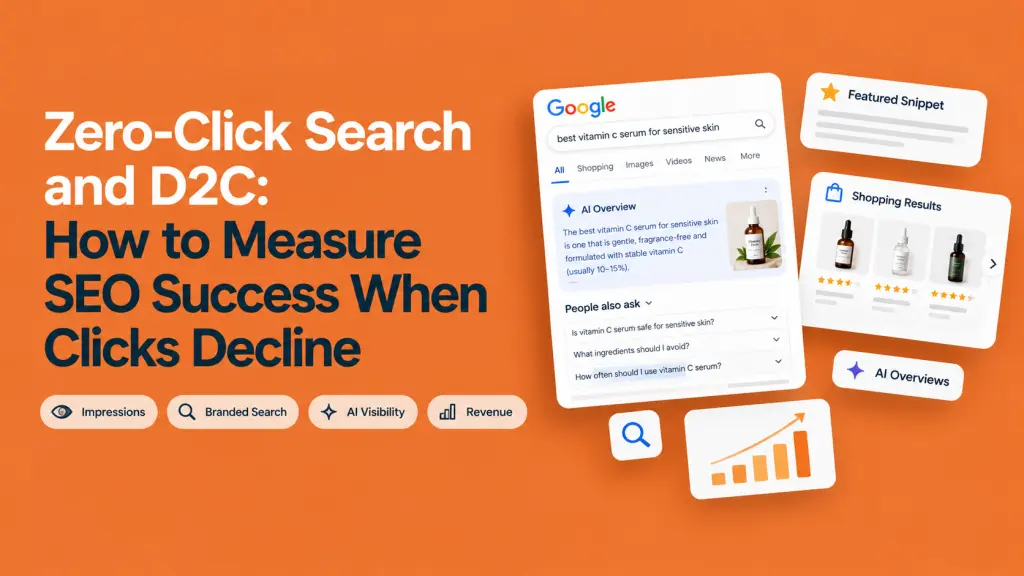
A zero-click search happens when the user gets what they need on the results page and never visits a site. For D2C brands, that includes product ratings, price comparisons, “People Also Ask” answers, local packs, and AI-generated summaries.
The scale is hard to ignore:
- Bain & Company research found that about 80% of consumers rely on zero-click results in at least 40% of their searches.
- Ahrefs reported that AI Overviews reduced clicks to the top-ranking page by roughly 34.5%.
- Gartner predicted that traditional search engine volume could fall 25% by 2026 as AI chatbots absorb queries.
This does not mean SEO is dying. It means the click is no longer the only place value is created. Shoppers still discover, compare, and form opinions inside search results. Your brand just needs to be present and measurable there.
Why Traditional SEO Metrics Break in a Zero-Click World
Organic sessions and click-through rate were built for a world where every impression had a path to your site. That path is shrinking. Pew Research found that users clicked a traditional result in about 8% of visits with an AI summary, compared to 15% without one.
If you judge performance on sessions alone, three things go wrong:
- Good SEO looks like failure. You can win more visibility while sessions drop.
- Budgets get cut for the wrong reasons. Leadership sees falling traffic and pulls investment from a channel that is still influencing purchases.
- Attribution goes dark. A shopper who saw your brand in an AI answer and later typed your name into Google shows up as “direct” or “branded,” not as SEO.
The fix is to measure influence, not just visits.
The Zero-Click Measurement Framework for D2C
Here is a practical framework we use to evaluate SEO when clicks decline. It works for Shopify, WooCommerce, headless, and custom stacks alike. You can see how we apply measurement thinking in our results library.
1. Track Impressions and Share of Search
Impressions in Google Search Console are your first proof of visibility. Rising impressions with flat clicks usually signals that your brand is being surfaced in zero-click features.
Go one step further with share of search: your branded search volume as a percentage of total branded volume in your category. Research from the Institute of Practitioners in Advertising (IPA) has linked share of search to future market share, which makes it one of the best leading indicators for D2C growth.
- Pull branded query volume monthly from Search Console and Google Trends.
- Compare against two or three direct competitors.
- Watch the trend line, not the single number.
2. Measure Branded Search Demand as a Zero-Click Outcome
When a shopper sees your product in a snippet or AI answer, the most common next step is a branded search. That makes branded search growth a direct downstream signal of zero-click exposure.
Segment your branded queries into brand name, brand plus product, and brand plus “reviews” or “discount code.” Growth in these segments tells you that top-of-funnel visibility is turning into purchase intent.
3. Monitor AI Visibility and Citations
Zero-click search increasingly happens inside ChatGPT, Gemini, Perplexity, and Google AI Overviews. Build a simple tracking routine:
- Maintain a list of 30 to 50 high-intent category and product questions.
- Check monthly whether your brand is cited, mentioned, or recommended.
- Log which pages and sources the AI platforms pull from.
This is your AI share of voice, and it is quickly becoming as important as keyword rankings.
4. Tie SEO to Revenue with Blended Metrics
Stop asking “How many clicks did SEO drive?” and start asking “How is SEO moving revenue and efficiency?” Track these together:
- Organic revenue and assisted conversions in GA4 (use data-driven attribution and path reports).
- Blended customer acquisition cost (CAC) and marketing efficiency ratio (MER), which show whether growing brand demand lowers your paid costs.
- Post-purchase surveys with a “How did you hear about us?” field. Self-reported attribution often surfaces search and AI discovery that analytics misses.
If branded demand rises, blended CAC falls, and survey responses mention Google or AI tools, SEO is working even when click charts look flat.
How to Optimize for Zero-Click Visibility
Measurement only matters if you act on it. Brands that earn zero-click placements tend to share a few habits, and many of them are covered in our insights library.
- Structure content for extraction. Use clear question-style H2s and H3s, and answer each in 40 to 60 words right below the heading.
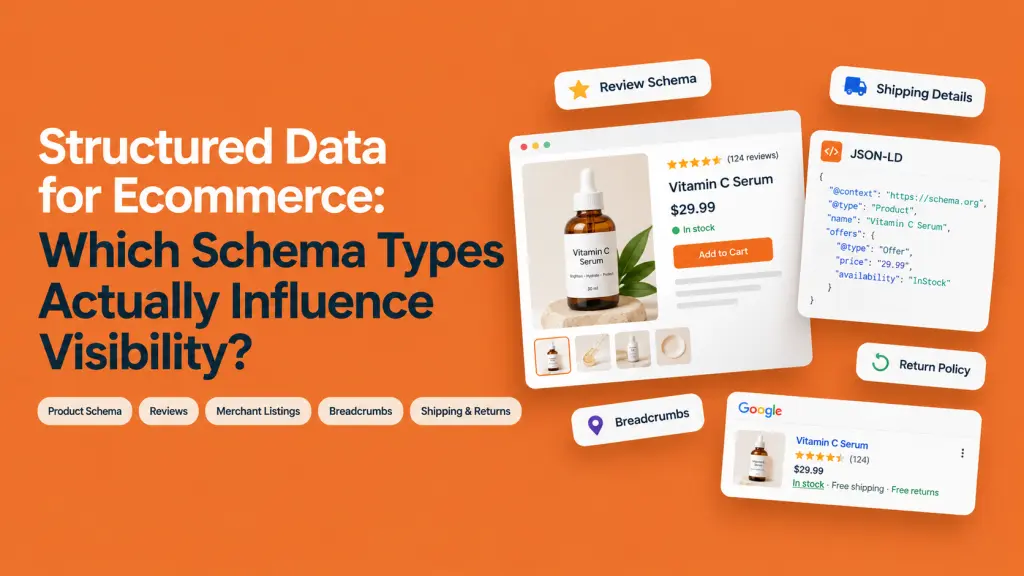
- Add schema markup. Product, Review, FAQ, Organization, and Offer schema help search engines display your price, ratings, and availability directly in results.
- Own your reviews and ratings. Star ratings in search results are a zero-click asset. Pull them consistently from verified buyers.
- Publish original data. AI systems cite sources with unique statistics, tests, and customer insights. Generic content gets summarized without credit.
- Optimize Google Merchant Center feeds. Shopping listings are zero-click by design, so feed quality directly affects visibility and revenue.
- Strengthen your brand entity. Consistent mentions across reviews, press, YouTube, Reddit, and your own site increase the odds that AI tools recommend you.
Our SEO and technical teams build these systems for D2C brands every day. Explore what that looks like on our services page.
Building Your Zero-Click SEO Dashboard
Keep it simple. A monthly dashboard with five blocks gives leadership a clear story:
- Visibility: Search Console impressions and top-three keyword coverage.
- Demand: Branded search volume and share of search.
- AI presence: Citation and mention rate across tracked prompts.
- Engagement: Click-through rate on pages where you hold rich results, plus engaged sessions.
- Revenue: Organic revenue, assisted conversions, blended CAC, and MER.
Review it alongside paid media data. When brand search climbs, your Performance Marketing campaigns often convert cheaper, which is the clearest proof that SEO and paid work as one system.
Frequently Asked Questions
What is zero-click search?
Zero-click search is when a user finds their answer directly on the search results page, through snippets, AI summaries, or knowledge panels, and does not click through to any website.
How does zero-click search affect D2C brands?
It reduces organic traffic from informational and comparison queries, but it increases brand exposure. D2C brands must track visibility, branded demand, and revenue instead of clicks alone.
How do you measure SEO success without clicks?
Track impressions, share of search, branded search growth, AI citations, assisted conversions, blended CAC, and post-purchase survey data. Together these show influence even when sessions decline.
Is SEO still worth it for e-commerce in 2026?
Yes. Search still shapes buying decisions, and brands visible in snippets, shopping results, and AI answers capture demand that competitors miss. The strategy has shifted from traffic to influence.
What is share of search?
Share of search is your brand’s percentage of total branded search volume within your category. It is a leading indicator of market share and brand strength.
How can I get my brand cited in AI Overviews?
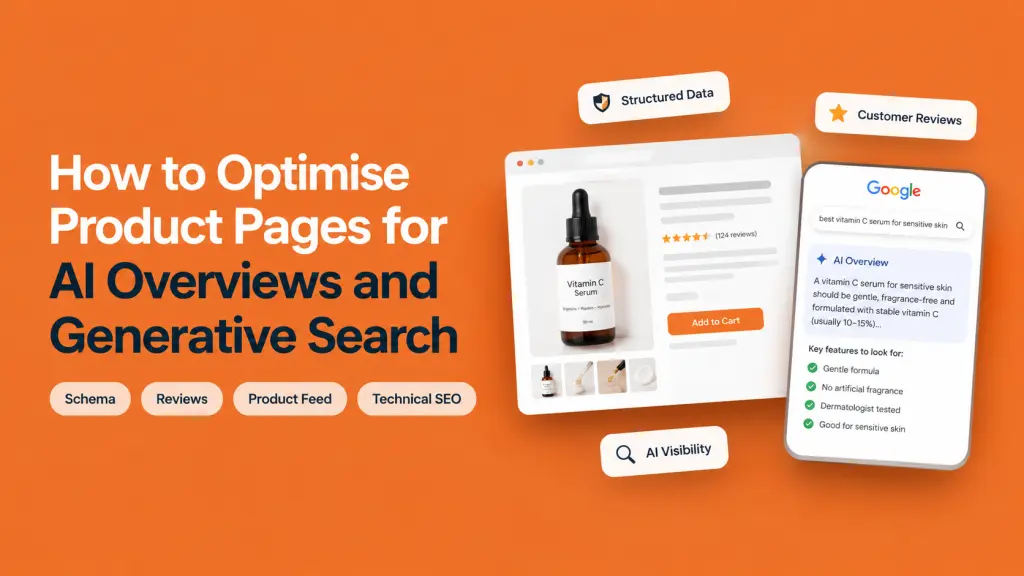
Publish clear, well-structured answers, add schema markup, share original data, earn reviews and third-party mentions, and keep your product information accurate and consistent across the web.
Should D2C brands reduce SEO investment as clicks decline?
No. Cutting SEO means losing visibility where shoppers now make decisions. Shift measurement toward brand demand and revenue impact, and keep investing in content, technical health, and entity authority.
Ready to Measure What Actually Drives Growth?
Zero-click search is not a threat to well-run D2C brands. It is a measurement problem, and it has a solution. The brands that adapt their reporting and optimization now will own the demand that others never see.
At Global Surat, we combine SEO, Performance Marketing, Web Development, and AI Creative to help D2C brands grow across India, the US, UK, Canada, Australia, and Europe. Book a strategy consultation with our team today and let us build a zero-click measurement framework tailored to your store. Start at globalsurat.com and see how we can turn search visibility into predictable revenue.
Make this useful